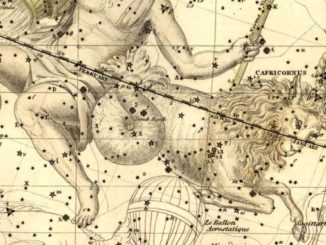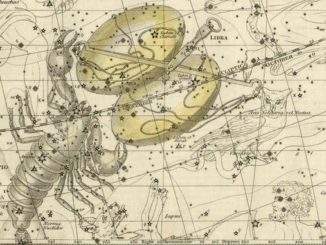
Scorpius is the 33rd largest of the 88 recognized constellations and the ninth largest of the zodiac constellations, covering approximately 497 square degrees of sky. Its brightest star, Antares (Alpha Scorpii), is a red supergiant about 550 light-years away, with an apparent magnitude of around +1.0.
For Northern Hemisphere observers, Scorpius is best seen during June and July. It lies low above the southern horizon at mid-northern latitudes, while observers farther south enjoy a much better view of its distinctive curved shape.
Set against the rich star fields of the Milky Way, Scorpius contains an impressive collection of star clusters and nebulae. Its four Messier objects are among the most rewarding targets for binoculars and telescopes, while several spectacular star-forming regions reveal the processes that create and shape new stars.
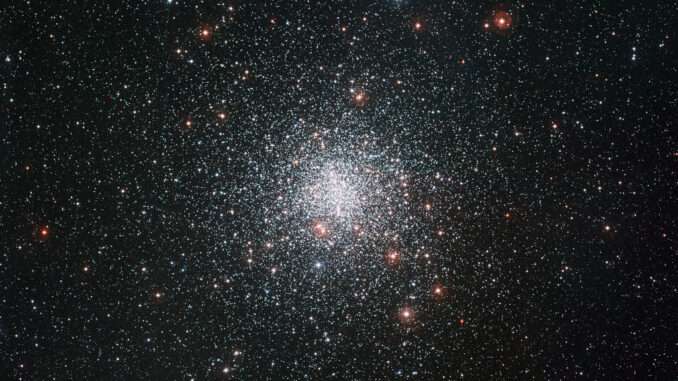
Messier 4 (M4, NGC 6121)
Located approximately 7,200 light-years away, Messier 4 is one of the nearest globular clusters to Earth. It spans roughly 75 light-years and was the first globular cluster in which individual stars were resolved through a telescope.
With an apparent magnitude of around +5.6, M4 approaches naked-eye visibility under exceptionally dark skies, although binoculars or a small telescope make it much easier to detect.
It is also particularly easy to locate, lying approximately 1.3 degrees west of bright Antares. Binoculars reveal a faint, rounded glow, while a moderate telescope begins to resolve individual stars. Larger instruments may show the distinctive bar-like concentration of stars crossing its central region.
Butterfly Cluster (M6, NGC 6405)
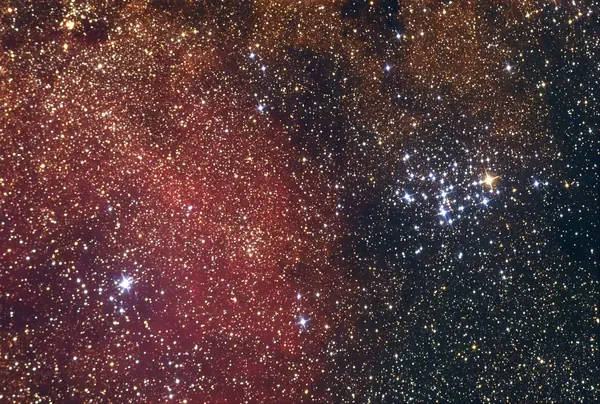
The Butterfly Cluster is a bright open star cluster whose prominent stars form a pattern resembling the outstretched wings of a butterfly. Most of its brighter members are hot, blue B-type stars, although its brightest member, BM Scorpii, is an orange giant.
M6 lies approximately 1,600 light-years away and has an apparent magnitude of around +4.2. Under dark skies it can be spotted without optical aid, while binoculars readily reveal its distinctive shape.
The cluster spans roughly the same apparent width as the full Moon, making it particularly well suited to binoculars and low-magnification telescopes. Look for it near the Scorpion’s tail, northwest of the brighter Ptolemy Cluster (M7).
Ptolemy Cluster (M7, NGC 6475)
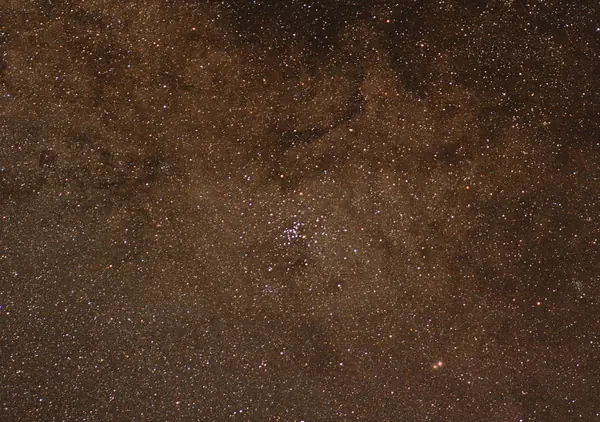
The Ptolemy Cluster is one of the most conspicuous open clusters in the night sky. It was recorded by the astronomer Claudius Ptolemy in the second century and is the southernmost object in the Messier catalog.
M7 lies approximately 980 light-years away and has an apparent magnitude of +3.3. Under dark skies it is easily visible without optical aid as a concentrated patch of stars near the Scorpion’s tail.
Binoculars reveal dozens of bright stars spread across a wide area, making M7 one of the finest open clusters for low-magnification viewing. From the northern United States, however, its low altitude above the southern horizon can make observation more difficult.
Messier 80 (M80, NGC 6093)
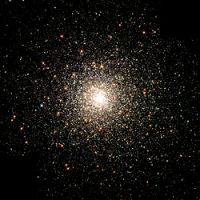
Messier 80 is an exceptionally dense globular cluster containing hundreds of thousands of ancient stars. It lies approximately 32,600 light-years away and can be found between Antares and Acrab (Beta Scorpii).
M80 is particularly interesting because of its unusually large population of blue stragglers. These stars appear younger and more massive than the surrounding cluster population, possibly because they have gained material from companion stars or formed through stellar mergers.
The cluster was also the site of a nova observed in 1860. Known as T Scorpii, the eruption occurred when a white dwarf in a binary system accumulated material from its companion, triggering a thermonuclear outburst.
With an apparent magnitude of around +7.3, M80 is accessible to small telescopes but appears as a compact, concentrated glow. Resolving its densely packed stars requires considerably more aperture and favorable observing conditions.
Cat’s Paw Nebula (NGC 6334)
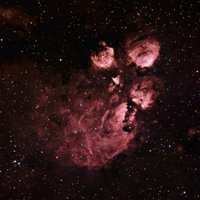
The Cat’s Paw Nebula is a vast star-forming region located approximately 5,500 light-years away. Stretching roughly 50 light-years across, it contains numerous young stars, including massive, hot stars whose ultraviolet radiation causes the surrounding hydrogen gas to glow.
Much of its ongoing star formation is hidden behind thick clouds of dust. Infrared observations allow astronomers to see deeper into these clouds and study young stars that are still forming.
The nebula’s distinctive appearance comes from several bright regions of glowing gas separated by darker clouds. Although spectacular in long-exposure photographs, the Cat’s Paw is a challenging visual target because much of its light is spread across a large area.
(NGC 6302, Caldwell 69)
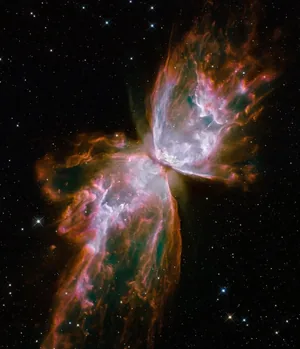
Located approximately 3,800 light-years away, the Butterfly Nebula is one of the most structurally complex planetary nebulae known. Its spectacular wing-like shape developed as an aging star expelled its outer layers near the end of its life.
A dense band of dust crosses the nebula’s center, helping to channel the expanding material into two enormous lobes. Gas in these wings is moving outward at speeds exceeding 600,000 miles per hour.
At the center is an extremely hot stellar remnant whose intense ultraviolet radiation causes the surrounding gas to glow. The remnant itself is largely hidden by the dense central dust.
Despite its dramatic appearance in Hubble photographs, NGC 6302 is a difficult target for small telescopes. Larger instruments may reveal a compact, elongated nebula, but the intricate butterfly shape is primarily an astrophotographic sight.
War and Peace Nebula (NGC 6357)
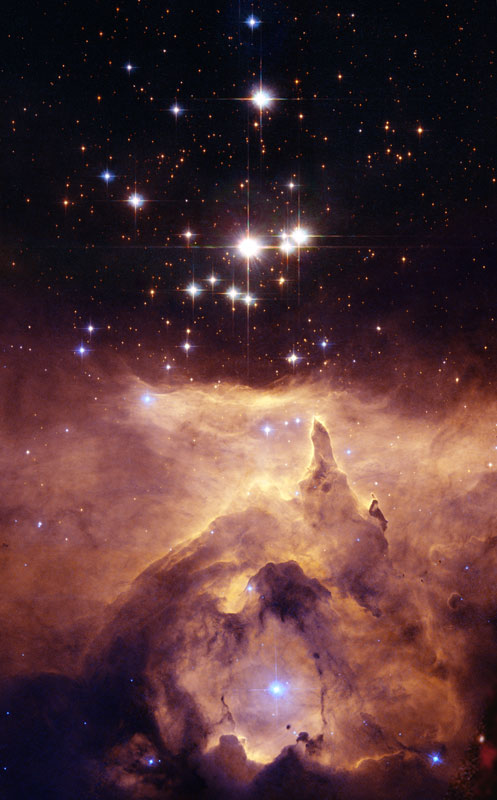
NGC 6357 is a vast emission nebula and active star-forming region located approximately 5,500 light-years away.
Embedded within it is the young open cluster Pismis 24, whose massive, hot stars illuminate and shape the surrounding clouds of gas and dust. One of its most remarkable members is Pismis 24-1. It was once thought to be a single extraordinarily massive star, but Hubble observations revealed that it consists of multiple stellar components. This discovery helped resolve the apparent conflict between its enormous estimated mass and the expected upper mass limit for individual stars.
Radiation and stellar winds from the cluster’s massive stars have carved cavities and sculpted pillars within the surrounding nebula. At the same time, dense clouds of gas continue to produce new stars.
Like the nearby Cat’s Paw Nebula, NGC 6357 is best appreciated through astronomical imaging. Its extensive but faint nebulosity makes it a demanding target for ordinary visual observing.