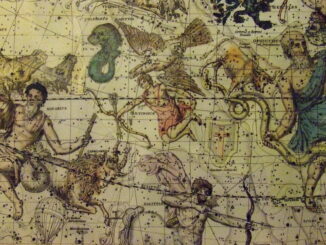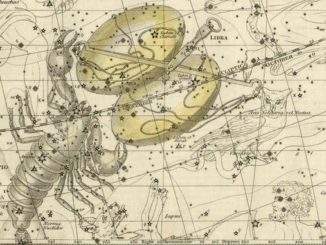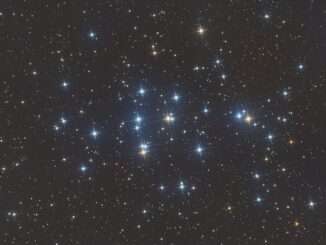
Aquarius is the 10th largest of the 88 recognized constellations and the second largest of the zodiac constellations, covering approximately 980 square degrees of sky. Its brightest star, Sadalsuud (Beta Aquarii), is a yellow supergiant with an apparent magnitude of about +2.9.
For Northern Hemisphere observers, Aquarius is best seen during September and October. It lies between Capricornus and Pisces in a region traditionally called the Sea, alongside other water-themed constellations such as Cetus, Delphinus and Eridanus.
Although its stars are relatively faint, Aquarius contains several rewarding deep-sky objects. These include the globular clusters M2 and M72, two contrasting planetary nebulae, and distant galaxies shaped by dramatic collisions. Some are accessible with binoculars or small telescopes, while others are primarily of interest to professional astronomers.
Messier 2 (M2, NGC 7089)
Messier 2 is one of the largest and richest globular clusters in the Messier catalog. Located approximately 37,000 light-years from Earth according to NASA’s Messier catalogue, it contains around 150,000 stars spread across a region roughly 175 light-years in diameter.
At approximately 13 billion years old, M2 is among the Milky Way’s oldest star clusters. Its apparent magnitude of about +6.3 places it near the naked-eye visibility limit under exceptionally dark skies, although binoculars make it much easier to find.
Look for M2 approximately 5 degrees north of Sadalsuud. Binoculars reveal a small, fuzzy patch, while a telescope shows a bright, concentrated center. Larger apertures begin to resolve individual stars around the cluster’s outer regions.
Messier 72 (M72, NGC 6981)
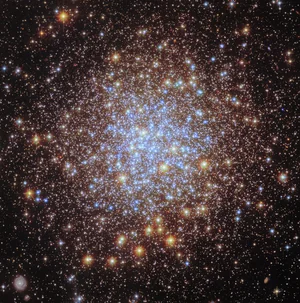
Messier 72 is another globular cluster, located approximately 50,000 light-years from Earth. With an apparent magnitude of around +9.4, it is considerably fainter than M2 and requires more effort to observe.
A small telescope shows M72 as a faint, hazy patch with a slightly brighter center. Larger apertures and dark skies are needed to begin resolving stars around its outer regions.
M72 lies in southwestern Aquarius, close to M73. Both objects can be visited during the same observing session, offering an interesting contrast between a genuine globular cluster and a small grouping of unrelated stars.
Messier 73 (M73, NGC 6994)
Messier 73 is unusual because it is not a true star cluster. Instead, it is an asterism consisting of four unrelated stars that happen to appear close together from our viewpoint on Earth.
Charles Messier recorded the object in 1780, but modern measurements have shown that its stars lie at different distances and do not form a gravitationally bound group.
M73 lies approximately 1.5 degrees east of M72. Through a telescope, its four principal stars form a compact pattern resembling a tiny Y or triangle with an additional star. Although visually modest, it remains an interesting stop for observers working through the Messier catalogue.
Saturn Nebula (NGC 7009, Caldwell 55)
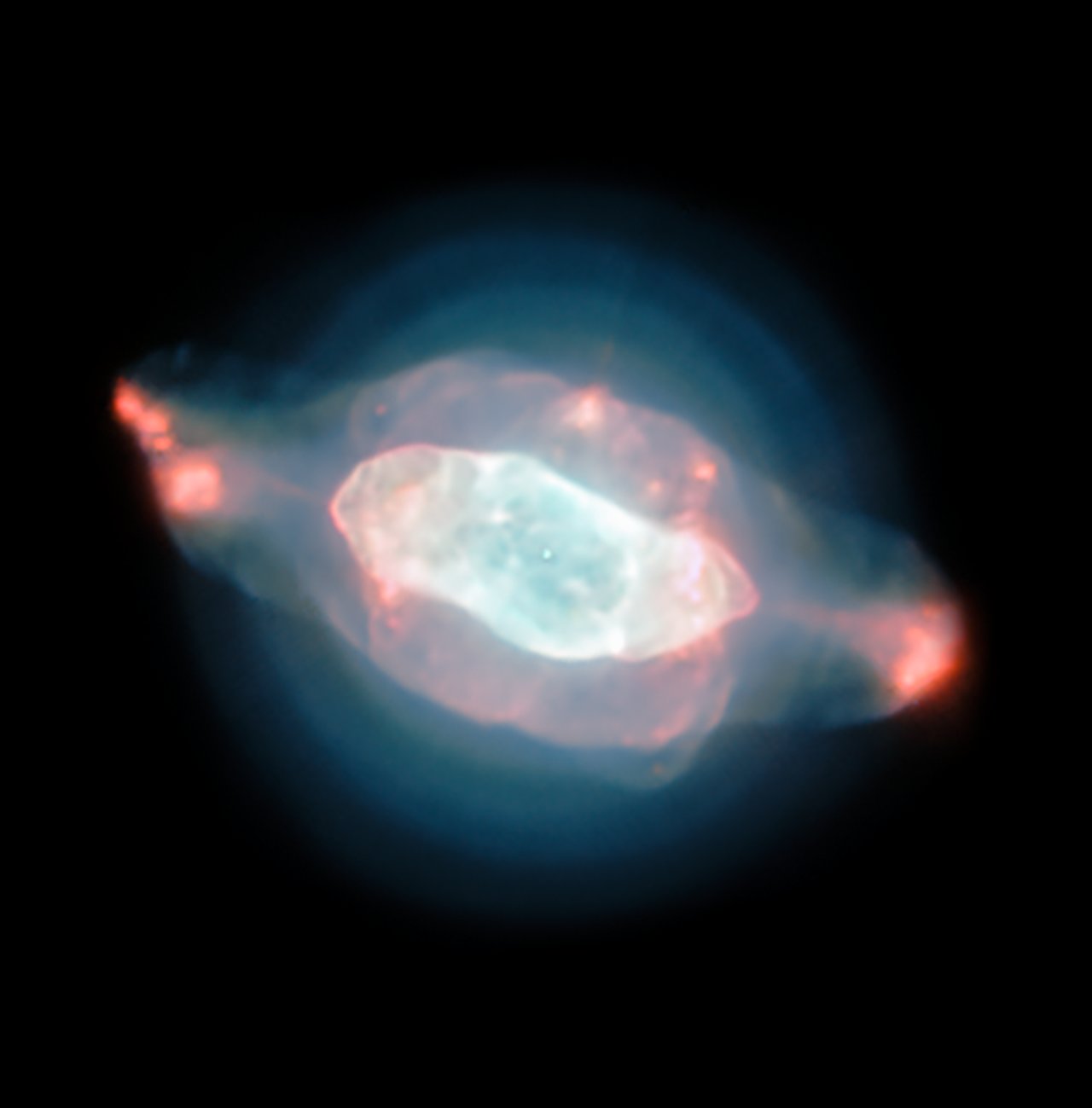
The Saturn Nebula is one of the most distinctive planetary nebulae in Aquarius. Discovered by William Herschel in 1782, it received its name because of two elongated extensions that resemble Saturn’s rings when viewed through a sufficiently large telescope.
NGC 7009 formed when an aging star expelled its outer layers, leaving behind an extremely hot stellar remnant. Radiation from this remnant causes the surrounding gas to glow.
Unlike many large, diffuse nebulae, the Saturn Nebula has high surface brightness. It can be detected with a relatively small telescope and may show a subtle blue-green color.
Look for it approximately one degree west of Nu Aquarii. At low magnification, it can resemble a slightly blurred star, but increasing the magnification reveals its small oval disk. The Saturn-like extensions are much harder to see and require larger telescopes and steady atmospheric conditions.
Helix Nebula (NGC 7293, Caldwell 63)
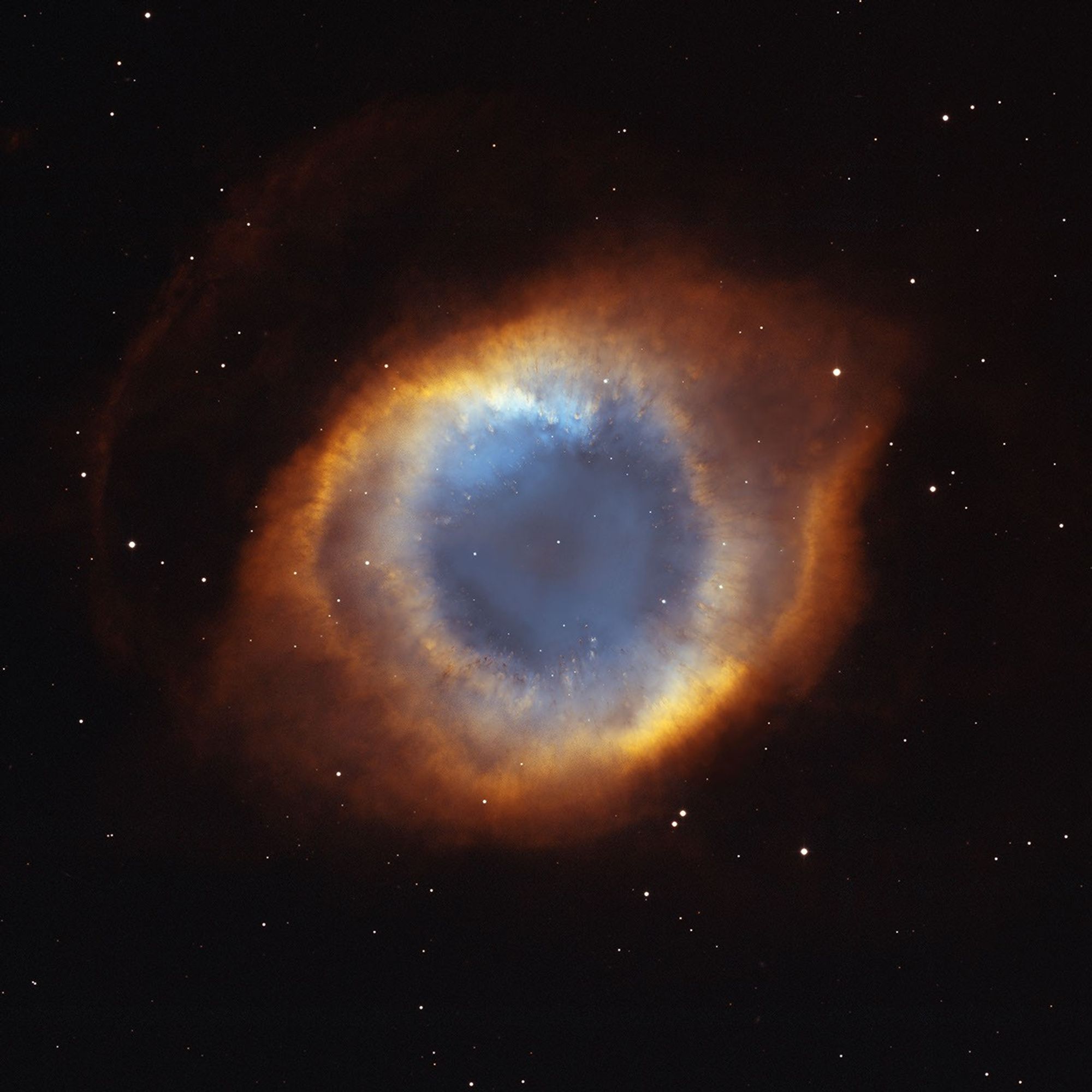
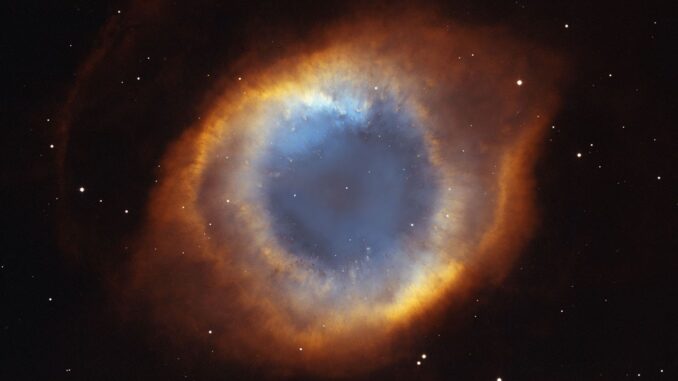
The Helix Nebula is one of the nearest planetary nebulae to Earth, located approximately 650 light-years away. Its apparent diameter is enormous compared with most planetary nebulae, spanning roughly half the width of the full Moon.
Despite its large size, the Helix has very low surface brightness because its light is spread across such a wide area. This makes dark, transparent skies particularly important for observing it.
Binoculars and small telescopes can reveal the nebula as a large, faint glow under favorable conditions. A nebula filter can improve its visibility, while low magnification and a wide field of view are generally preferable to high magnification.
The Helix presents almost the opposite observing challenge to the compact Saturn Nebula. At its center lies the extremely hot remnant of the star that expelled the surrounding gas, which continues to expand into space.
Aquarius Dwarf (DDO 210)
The Aquarius Dwarf is a small dwarf irregular galaxy belonging to the Local Group, located roughly 3 million light-years from Earth. Despite its relative proximity, it is extremely faint and is not a practical target for ordinary backyard telescopes.
Studies of its stellar populations suggest that star formation developed unusually slowly compared with many other Local Group galaxies. Although it contains ancient stars, a substantial proportion of its stellar population formed much later.
This makes the Aquarius Dwarf particularly interesting to astronomers studying how small galaxies evolve. Its history shows that not all dwarf galaxies formed most of their stars during the earliest stages of the universe.
Atoms for Peace Galaxy (NGC 7252)
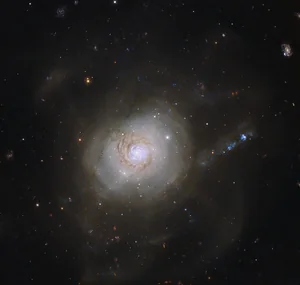
NGC 7252, known as the Atoms for Peace Galaxy, is located approximately 220 million light-years away. It is the remnant of a major merger between two galaxies, with long tidal tails and loops of stars extending far beyond its central region.
Its unusual name refers to the resemblance between its looping structure and traditional illustrations of electrons orbiting an atomic nucleus. It also recalls President Dwight Eisenhower’s 1953 “Atoms for Peace” speech.
The merger triggered extensive star formation, producing hundreds of young star clusters. Astronomers study these clusters and the surrounding tidal debris to understand how galaxy collisions transform their structure and stellar populations.
NGC 7252 is a challenging visual target. Larger amateur telescopes under dark skies may reveal its faint central glow, but the spectacular tidal tails seen in photographs are much harder to detect.
NGC 7727
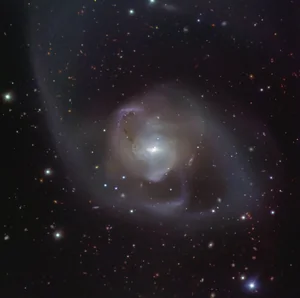
NGC 7727 is another galaxy shaped by a major merger. Located approximately 89 million light-years away, it contains distorted stellar streams and irregular structures left behind when two galaxies collided more than a billion years ago.
Its most remarkable feature lies near the center, where two galactic nuclei remain separated by approximately 1,600 light-years. Each contains a supermassive black hole, providing astronomers with an unusually nearby example of two black holes brought together by a galactic merger.
The black holes have estimated masses of approximately 154 million and 6.3 million times that of the Sun. Astronomers expect them eventually to merge as their separation decreases.
Through larger amateur telescopes, NGC 7727 appears as a faint, concentrated glow. Its disturbed outer structure and the two central nuclei require detailed astronomical imaging and spectroscopy to study.
Other Deep-Sky Objects in Aquarius
Aquarius contains numerous additional galaxies and galaxy clusters, although most are very faint targets for amateur observers. These include NGC 7257, NGC 7759 and the distant galaxy cluster Abell 2597.
For most backyard observers, M2, M72, M73, the Saturn Nebula and the Helix Nebula are the most accessible and rewarding deep-sky targets in the constellation.